Wednesday, April 29, 2009

My Confederate Jasmine

Nature's Air Freshener!
It had been a good day and time to relax. Thanks to daylite savings time, I had finished up dinner (supper), gotten my shower, and now walking around the yard drinking my last cup of coffee while admiring my garden. It was still daylite with beautiful cool weather.

Something was different though. I noticed a faint scent in the air- you know the kind where the clothes dryer is going and the smell of Downey Fabric Softner is being exhausted outside? The scent was something like that but more subtle, fresh, and very pleasing to the senses. It was like nature was using an air freshener!
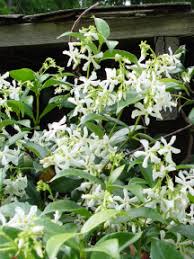
I was determined to find the source when I turned the corner and straight ahead there it was- my Confederate Jasmine! It was full bloom and statley as if to say, Here I am!"


Tucked away underneath and hidden from view was a special treat. Last season, my son (Tim) and I had gathered four gallon containers and filled them with potting soil. We pulled four separate vines lose from the trellis. Each vine was bent where there was a nodule (leaf) and placed in the potting soil. One end of the vine remained attached to the main plant and the other end was left to grow. Tim placed a brick over the spot where the vine was placed in the pot to ensure the vine remained in the soil.

Yesterday was the day to claim our reward. I clipped the vine from the main plant and "unwound" the new vine from the trellis. It was perfect! Both ends of the vine were in full bloom and the container was full of good roots.

The new treasures were quickly planted in the new home spot. It has been my experience that Confederate Jasmine like a moist but not wet soil to do their best. Their planting spot was tilled and a good measure of ground spagnum peat was added to the soil along with some Miracle Grow slow release fertilizer. Now it is time to step back and watch them do their thing!

Side Note
The jasmine that I am speaking of has been with us for a long time (years). We haved moved it right along with us as we have gone and survived Hurricane Katrina. My youngest son was married in an outdoor ceremony under an arbor fashioned for this very same Confederate Jasmine!

Til next time,

Poppy

Monday, April 27, 2009

Another Great Weekend!

A beautiful weekend it was!
Tim and Denise came down for a work/play visit this weekend with plants and tools ready. They combined their visit with some time to go down to the beach and get some sun&sand. Denise says that once you get that beach sand between your toes, you're hooked for life.

We got a lot done in a short period of time however. Mulching, planting some Confederate Roses (a donation from Tim and Denise), and some tilling. It was a bit breezy, but with the high in the mid 80s, the breeze sure felt good.

Are you familiar with the Confederate Rose? Here is a little blurb about it to refresh your memory or to familiarize yourself with it.

Hibiscus mutabilis is an old-fashioned perennial or shrub hibiscus better known as the Confederate rose. It tends to be shrubby or treelike in Zones 9 and 10, though it behaves more like a perennial further north. Flowers are double and are 4 to 6 inches in diameter; they open white or pink, and change to deep red by evening. The 'Rubra' variety has red flowers. Bloom season usually lasts from summer through fall. Propagation by cuttings root easiest in early spring, but cuttings can be taken at almost any time. When it does not freeze, the Confederate rose can reach heights of 12 to 15 feet with a woody trunk; however, a multi-trunk bush 6 to 8 feet tall is more typical. Once a very common plant throughout the South, Confederate rose is an interesting and attractive plant that grows in full sun or partial shade, and prefers rich, well-drained soil.

My next post will be about our Confederate Jasmine.

Til next time,

Poppy

Wayside Gardens

Friday, April 24, 2009

Poppy's Picks- Drought Tolerant Plants

Coneflowers
icon(Click for more info)
Coneflowers thrive in full sun and most garden soils. They grow two to three feet tall, are easy to care for, and make wonderful butterfly magnets. Though drought tolerant, a little TLC (water), will liven it up during prolonged dry spells.

To encourage more flowers, deadheaded your coneflower plants regularly. You can also try shearing the plants back by half or two-thirds their height in early summer to encourage bushier growth and more profuse flowering later in the season.

Coneflower seed-heads are a favorite food of migrating and overwintering birds. If you leave the spent flower-heads in place in late fall, you will find that they are very good at attracting birds to your yard.

Asclepias 'Hello Yellow'
icon(Click for more info)
Bees and butterflies love'm! As they open, the butterflies and bees begin arriving. This Asclepias contains an essential food for Monarch butterflies, and apparently everything else with two wings finds it yummy as well!

Astilbe 'Fanal'
icon(Click for more info)The Astilbe 'Fanal" is an excelent perennial that blooms from early to mid summer producing the darkest red of the Astilbes. The plant is about two feet tall with spikes about one foot long.

The Astilbe in general, likes moist, well dreained soil but can tolerate dry spells with the help of mulch. Just a little TLC goes a long way with this plant.
Here's some more...
Butterfly Carpet
icon

Baptisia 'Purple Smoke'
icon


The above picks will conserve water and labor! They are hardy and wil take hot dry conditions while giving brilliant colors, facinating textures, and unique forms.

Til next time,

Poppy

Wednesday, April 22, 2009

Poppy's Veggie Garden-Progress Report

Looking Good!
Wouldn't it be great if every seed you planted germinated? It just doesn't work that way though. Cucumbers have been my greatest challenge. It took three re-plantings to get a descent stand going.

Here is what is growing- green beans, cucumber, sweet corn, yellow squash, zuccini, cantaloupe, muskmelon, watermelon, peppers, okra, tomatoes, butter beans, field peas, and peanuts. Around the perimeter are zinnias to attract bees and butterflies to help with pollination and unwanted bugs.

Sweet corn was the easiest. Almost all of the seed germinated and growing great. Squash was the next best with an 80% germination rate.

The most aggravating of all was some seedlings purchased from a local "feed & seed". I bought some tomatoes, egg plants, peppers, and more. All but one died!

Overall, the garden looks great. Everything is growing well and haven't had any problems so far with any diseases or pests. We are looking forward to having enough to do some canning this year. Sound like fun?

Share some of your experiences and what you've got growing.

Til next time,

Poppy

Park Seed

Monday, April 20, 2009

Ornamental Grass In Your Landscape?


Muhlenbergia capillaris
icon(click for more info)
Ornamental Grasses make a great way to trim out your landscape! Best of all- low maintenance! Most grasses can tolerate drought, heat, and poor soil conditions. Add just a little TLC and you will be well rewarded.
Ornamental grasses look great in groupings by themselves or added into existing beds to add interest. Use them to separate groupings of other plants, background, or trim.
You can get just about any size or color you want.
Ornamental Grass Collection
icon(click for more info)
Ornamental grasses contrast with broad-leaved plants beautifully, create pleasing movement with the lightest breeze, and perform beautifully even in less-than-ideal conditions.
'Karley Rose'
icon(click for more info)
Can't be beaten for hardiness, foliage, bloom color, growing season and inflorescence!


Pennisetum Foxtrot
icon(click for more info)
This splendid pink-flowered Giant Fountain Grass is a joy from midsummer right through fall, sporting masses of swaying, shimmying plumes AND eye-catching golden fall foliage!


Try'em, you'll like'm

Til nest time,

Poppy

Friday, April 17, 2009

Some Pruning Tips

Spring Bloomers
The best time to prune spring bloomers is as soon as the plant has bloomed out. On younger shrubs, prune branches back to nonflowering shoots or back to healthy buds pointing in the direction you want the shrub to grow -- typically away from the center. Always cut back diseased or weak stems to healthy wood. Disinfect the blades with a 10 percent solution of bleach between cuts to prevent spreading disease.

New Shrubs
Young, newly planted shrubs, require cutting back after their first bloom. The trim helps them to grow a stronger framework and bloom more profusely later. Some species, such as Forsythia Y intermedia or beautybush (Kolkwitzia amabilis), may not bloom heavily their first few years, but they still need weaker growth and wayward branches cut out; their main shoots should be trimmed to a strong bud or pair of buds.

Established Shrubs
Older shrubs can get out of shape and new growth slows down. Dead limbs can become diseased. Trim back to create new growth and remove all dead wood. You may sacrafice some blooms the following season, but it is well worth the trim in the coming years.

Exceptions to the Rule
Knowing your plants comes in handy when pruning. Some plants produce new shoots during the growing season but will not bloom the following season. Hydrangeas are one of those, therefore requiring minimal pruning. If you aren't sure when is the best time or how certain plants should be pruned, check it out on the internet or with your local agricultural extension agent.

Til next time,

Poppy

Wednesday, April 15, 2009

Time to Deadhead and Prune


My azaleas have bloomed out- now what?

When the azaleas and rhodies have bloomed out, it is time to deadhead, prune, and fertilize. Dead heading azaleas and rhodies is nothing more than removing what few blooms that have died out, but are still hanging on to the stem. Removing helps to allow for new growth sooner and keeps down possibilities of disease. Also clean out the fallen blooms from beneath. The collection underneath is "hot bed" for incubating all kinds of bad stuff!

Selectively prune back lanky limbs and stems. This will give the plant better shape (if done carefully) and promotes more branching for a fuller appearance for your plants.

It is a good time to fertilize now that the azaleas and rhodies have bloomed. I made the mistake of fertilizing before they bloomed once long ago. I learned my lesson not to fertilize before they bloom because they won't!

I have a technique for fertilizing my azaleas. After cleaning out below, I will use a small cultivator fork to losen the soil about an inch deep. Depending on the size of the plant, I'll sprinkle a handful or two of a balanced 8-8-8 or 10-10-10 slow release fertilizer. Then I'll work in (mix) the ferilizer into the soil. This helps the "food" get to the root system sooner and doesn't get washed away after watering. By the way, it is good to water after feeding.

Til next time,

Poppy

P.S. Now is a good time to deadhead any other plants. For mums, pinch off the last inch or so of the branches until July to assure bushy, well-flowering plants. While you're at it, cut back asters and other tall, floppy, late-summer bloomers by about one-third once they're a foot or so high. They'll be sturdier and flower better.

Park Seed

Monday, April 13, 2009

April Garden Tips Continued


Plants and Trees
Continue to plant container-grown trees, shrubs, perennial herbs, groundcovers, and perennial flowers.

Time to Mow?

It is time to mow when you can't stand looking at a ragged lawnscape any longer. Once you start, mow regularly and at the right height. It's the best thing you can do to control weeds and keep grass thick and healthy. Now, during cool weather, mow cool-season lawns such as bluegrass, ryegrasses, or fescues at 2 inches or so. Raise the mower blade to 3 inches once temperatures hit the 90s F. Mow warm-season grasses such as Bermuda, St. Augustine, and zoysia at approximately 2 inches all season long.

We have a tendancy to overlook the benefits of aerating the lawn. Aeration helps remove thatch build up that provides a nesting place for lawn diseases. Aeration also helps with soil compaction. Grass does much better when the roots can spread easily. Most rental centers have aerators for rent making the job much easier.

Mulching

Mulching is good for your garden and for YOU! Mulch helps to hold much needed moisture in the ground for the plants. It helps to retard the growth of weeds at the same time. The results- less watering during dry spells and less work removing unsightly weeds. Good for You!

Add appearace to the benefits of mulching. Mulch gives your beds definition between the bed and the surounding area- setting it apart. That gives you opportunity to become creative with shapes, directing traffic flow through the garden, and highlighting your favorite plants. The contrast of mulch color and texture between the plants and the surounding environment can be eye catching.

Til next time,

Poppy

LandscapeUSA.com

Sunday, April 12, 2009

Garden Tips for April


Refer to Frost Map
First tip- don't get ahead of your frost zone! Check out your area for the best time to plant (or whatever your chore) to ensure the best success.

The gardening tips for April are for Southern gardens. However, you can use these tips in your area- here is the trick!

Determine your frost zone first. Lets say that you live in an area where last year's frost occurred between April 30 to May 30 (the green zone). That means you have at least a few more weeks to plan. Your gardening schedule follows the Southern schedule by the difference in the Frost Map.

It is not too late to move bare root plants. If you can work the ground (free of ice), you can still relocate these. After your perennials have bloomed out, this would be a good time to divide the ones that have become crowded and effected their growth or blooming.

Speaking of Spring bloomers, like azaleas, wait until they have bloomed out before fertilizing. Fertilization brings about new growth which will push off the blooms prematurely. Be patient and enjoy the blooms while you have them.

Follow the planting instructions on seed packs if you are planting corn, peas, beans, etc. Again, patience! The soil needs to warm after the last frost in order for the seed to germinate. Seed germinate best between a soil temperature of 40 and 60 degrees F for warm weather plants. It can take a while for the soil to warm depending on weather conditions.

I'll talk about annuals, mulching, prunning, and maybe more.

Till next time,

Poppy

Gardener's Supply Company

Friday, April 10, 2009

Give Your Landscape Some WOW!


Clematis 'Niobe'
icon(click for more info)

Dress up your landscape and give it some "WOW" at the same time! Like that mailbox that stands starkley in the very front of your house- one of the first things people see? Or maybe you have some porch columns that could use some help. Perhaps you would like to "screen out" some area of your landscape that just doesn't quite fit in.

Now is the time to make things POP with the Clematis 'Niobe'.
icon 'Niobe' is simply the best red Clematis available, its crushed-velvet blooms glowing with rich color from the moment the buds open. Their initial shade of nearly black matures to a deep ruby, offset by a slender, prominent center of bright yellow.
This gorgeous, easy-to-grow climber blooms heavily over a long summer season on compact, manageable 6-foot vines, creating an unforgettable display.

How do I take care of my 'Niobe'?

Clematis 'Niobe' grows readily in rich, well-drained, alkaline soil with plenty of room for the roots to spread. Water well but avoid keeping its "feet" wet, and feed it each spring with an organic fertilizer. Prune 'Niobe' in early spring by cutting the vine back 6 or 8 inches to the nearest pair of strong leaf axil buds.

What are some good companion plants for my new 'Niobe'?

Roses
icon Roses are classic Clematis companions, especially climbing varieties with complementary bloom colors. The rule of thumb for these vines is to keep the roots cool and the tops warm, so pair them with bushy perennials that will shade their feet while providing extra color! Whatever companions you choose, be careful not to overcrowd Clematis or plant it with anything that would compete for moisture or nutrients.

Lavandula 'Munstead'
icon(click for more info)


Phlox divaricata 'Manita'
icon(click for more info)


Til next time, go forth and do great things!

Poppy

Thursday, April 9, 2009

Poppy's Top Picks


Rosa 'Zephirine Drouhin'
icon

Long-Blooming, Thornless, and Very Profuse, Even in Shade!

This classic old-fashioned climber offers big semi-double blooms of bright pink, peaking in spring and fall.
Grows vigorously to 15 to 20 feet and, remarkable for any Rose, performs well in shade; excellent for north-facing walls and areas with little sunlight. The perfect choice to train over a trellis or porch, or trim into a formal hedge. Zones 5-9

Nepeta 'Walker's Low'
icon
Blooms from Late Spring through Fall!
The gray-green foliage is highly aromatic.


Cats will stay away from this one!
The large lavender-blue blossoms, topping the leaves on tall, crowded stakes, arise heavily from late spring through midsummer, then reappear for a second heavy bloom in autumn!

Cut it back several times during its first bloom season for a denser, bushier growth and quicker reflowering. Resistant to drought and highly adaptable to a range of garden conditions. It was named 2007 Perennial Plant of the Year!
Zones 5-9.

Enjoy!

Til next time,

Poppy

Sunday, April 5, 2009

Create Magic Combinations In Your Garden

Use Color, Texture, and Size
Using complimentary colors, textures, and sizes can create eye catching displays within your garden. You may already have a good source of varieties available in your garden now that could be re-arranged.

In our haste to get some life in our gardens, we sometimes just put our purple petunias over here and our marigolds over there, etc. I've been there, done that! Before you know it you end up with a garden with plenty of color but it just doesn't "ring your chimes".

Try Some of These Combinations using differences in the three basics- color, texture, and size.

Color
Don't throw the color wheel away (if you are color blind- then seek help). The color wheel can be tremendous help, even artist rely on it from time to time. Some of the terms that I use may not be technically correct but hopefully you will get the jest of my points.

Think "intensity"- from deep rich color to light faint color within the same group. For example, the deep purple of the viola mixed with light blue grape hyacinths. Repeat this with combinations of reds, yellows, and blues.

Let Mother Nature teach you a thing or two about colors. Take a close look at the pansy for example. How many different colors do you see? How well do the different colors compliment each other? Also notice how there may be more of a particular color than another. Try to incorporate some of these color schemes into your beds or garden as a whole.

Texture

Texture means different things to different people. To me, texture runs the gambitt from types of foliage (broad leaf, blades, etc.) to the mere shape of a tree or plant. It can be a stark appearance to a light fluffy feel.

It comes down to what type of emotion or "feel" are you trying to create. Formal vs casual, warm vs cool, cherry, restful, and the list could go on forever. Whatever "feel" or use you are attempting to create, texture is of utmost importance!

Size

Yes, size does matter. There are an infinite number of variables when it comes to size-area, height, and width. The area can pertain to the garden as a whole, a flower bed, or that corner of the yard that has been neglected. It could mean the surrounding structures or existing trees. Which ever the case, size should be considered.

In my case for example, trying to develop a cohesive design or theme for a large area (over four acres) has been quite a challenge. As for my estimation, just putting in a few flower beds here and there would end up looking like a patch work quilt. Also, a flower bed viewed from a distance appears much smaller and the detail is lost even though up close it looks perfect.

Another case in point would be that of outdoor garden rooms. Garden rooms serve the purpose of privacy, respite, and intimacy. Using large plants (a tree being the exception) would create a feeling of being crowded or overwhelmed. Smaller plants would be much more appropriate. Any furniture being used must balance with the size of the area as well.

I could go on and on, but an entire book is most probable already written about color, texture, and sizes. Maybe I should follow up with more on each of these subjects. What do you think? How about letting us hear from you about it?

Til next time,

Poppy


P.S. Here is a good color mix: Viola
icon and bulbs
icon

Saturday, April 4, 2009

Gardening Can Be Frustrating!

YUP! I'm Frustrated.

As you know by now, I've been busy getting my veggie garden prepared and planted for the past few weeks. Everything has gone well until now. No big deal, but aggravating might be the best way to put it.

What's the deal? I went to a local "Feed & Seed" last week and purchased some beddding plants to get a head start on some veggies. I bought some tomatoes, squash, pepper, and some others. The plants looked OK at the store.

Within a couple of hours, the plants were in the ground. Now with a little TLC along the way, I envisioned fine healthy plants producing an abundant crop.

-------------------------------WRONG!------------------------------

The tomatoes and pepper plants were showing signs of stress by the next day. The leaves began to lose their color with white edges. Day three presented wilted leaves and some plants were crumpled over. #5@?":*&^%!!!!!!

The squash I had planted from seed looked much healthier. The cucumber is about the same story.

Another life's lesson, PATIENCE! Sometimes it works out for the best not to push Mother Nature.

Let me hear some of your stories.

Til next time,

Poppy

$15 OFF $ 75 or More Just in Time For Spring Seed Starting! Shop Now!