Friday, May 29, 2009

Some Thoughts on Garden Texture

Eleminate the garden blahs with texture!

Do you get tired of just seeing more plants in your garden? I know I do. Sure, I love my plants but sometimes it is nice to see a surprise element, different, and create some excitement.

There is another extreme- those garden beds that become "trinket beds". I'm sure you have seen those that have more toads, useless bird houses and the like filling up the garden. Don't get me wrong, I think some are neat and can create some interest. Where we have a tendancy to go astray is over-doing a good thing.

To me, the use of non-plant accents are just that- accents. They should not be the highlight of the garden, but used to make transitions, create interest, or to call attention to a particular area. For example, let's say that you have some beautiful violets, but they are small and are hidden from a casual view of the garden. A figureine (paying particular attention to the size) placed among them would call the observer over for a closer look. Then voila, "look at these beautiful violets!"

The use of accents can make a garden an enjoyable experience or a complete "turn-off". Use them wisely.

Til next time

Poppy

Gardener's Supply Company

Wednesday, May 27, 2009

Poppy's Veggie Garden


WHEW!

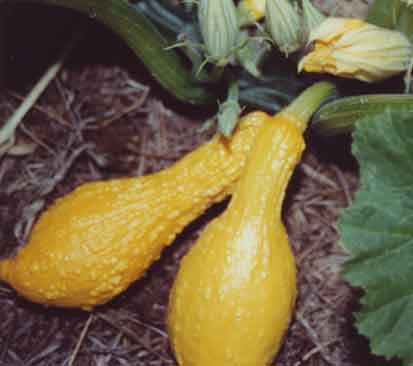
The yellow and zucchini squash are about to wear me out. It is unreal how much they are producing this year. I'm harvesting over a five gallon bucket every other day from a dozen plants.

I did something a little different this year. The squash was planted in individual hills in a circle- five plants per hill. Some 8-0-8 fertilizer was mixed in the soil with the seed. Then in the middle of the circle, a cup sized hole was made and filled about half full of 8-0-8 and covered with soil.

The new plants got off to a slow start, but suddenly it was if someone gave them a shot of some super stimulant. The plants shot up to about waist high with blooms galore. I'm assuming that their root systems tapped into the reserve fertilizer that was placed in the center. I'll try it again next season to see if I get a repeat performance.

Speaking of squash, I remember as a child of helping (lol) my mom "cold can" squash. We had plans to do that this year, but after doing some research found that it is not recommended to cold can squash because of the possibility of botulism. However, using a pressure cooker is OK but likely that the results would be a jar of mush. That left one option- freezing.

My tomatoes aren't doing very well- they have a case of blossom drop. Supposedly, blossom drop is the result of either of three conditions- high temperatures, high humidity, or too much nitrogen in the soil. Either way, there doesn't seem to be much I can do about it. THAT IS FRUSTRATING! Do you have any words of wisdom?

Til next time,

Poppy

Friday, May 22, 2009

Mr. and Mrs. Bluebird- Their Story


Home Sweet Home

In early Spring, there were at least a dozen bluebirds that visited our yard every day. It was fun watching them chasing bugs for food. They would find different posts (power lines, tree limbs, etc.) to perch for a "bird's eye" view of the yard below. You would see one suddenly swoop down and snatch a bug from the grass that may have been up to a hundred feet from their perch.

All I can say is that the bluebird must have one heck of a good eyesight. After making the catch, the bluebird would return to it's perch to devour it.

All was going well until the mockingbirds realized that the bluebirds were encroaching on their territory. It was an ongoing battle from that point forward. The mockingbirds would chase the bluebirds off and then return to claim the area for their own hunting ground. The bluebirds couldn't stay away for long however, and would return again and again to get their share of the goodies.

Granny and I had installed a bluebird box on an oak tree in hopes of giving a loving pair of bluebirds a home for raising their young. There was a problem however. The very tree we had selected was a tree that the mockingbirds had used the year prior to nest in. You guessed it- the mockingbirds felt that the oak tree belonged to them and should not be shared with the lowly bluebird.

We became frustrated at the mockingbird's intolerance. Each time a bluebird would arrive at the box to check it out, the mockingbird would chase it off. Granny had some firm opinions about how she felt about the selfish mockingbirds. In fact, the subject of annihilation was discussed but settled on scaring off the mockingbirds with a BB gun. What a waste of time and the stress of it!

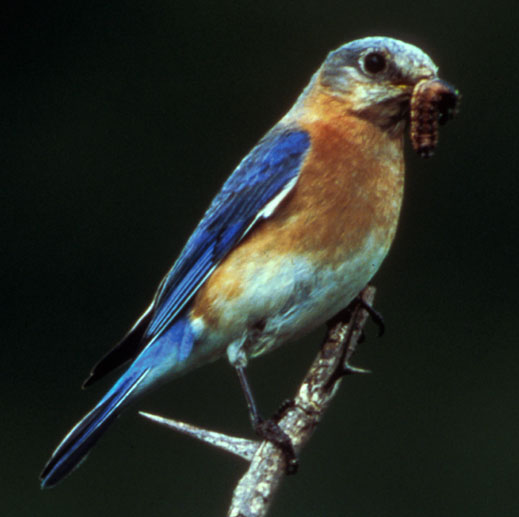
We should have known that nature has a way of taking care of things. When Mr. and Mrs. Bluebird decided it was time, they staked their claim on the box and the whole tree as well. We rooted for the bluebirds as they would chase away each mockingbird that came anywhere close to "their" tree. One case in particular was a hoot! A mockingbird had made a bug catch on the ground just below the bluebird house. While on the ground trying to eat his catch, Mr. Bluebird "dive bombed" the mockingbird until he gave up and got out of there.

The latest. Mr. and Mrs. Bluebird built a nest in their new home and now are proud parents of a brood. It has been a real treat watching them go about house keeping and parenting. One day I saw Mr. Bluebird bring a morsel of food to Mrs. Bluebird who was taking a break from nesting and perched on top of their house.

Now we are waiting to see our babies come out of their nest and take on the world- especially Mr. Mockingbird.

Got any stories to share? Let us hear from you.

Til next time,

Poppy

Monday, May 18, 2009

FREE Buffet!

Create a FREE buffet for your winged friends!

Much can be said for the enjoyment of watching humming birds in search for the perfect flower or the many colors of the butterfly flitting through your garden. Attracting winged quests to your garden is easy and most enjoyable.

If you don't already have some plants that attract these performers, here are some suggestions.


Sidalcea 'Brilliant'
icon

Neon-bright blooms that attract both butterflies and hummingbirds like crazy. The Sidalcea reaches about three feet tall and reblooms readily when cut back after first bloom.

Use it in the cutting garden, border, containers, or even as edging, its bright flowerstems leaning companionably into garden paths, its neat rosette of foliage remaining attractive out of bloom. It flowers so profusely that you can skillfully cut a half dozen or more bloomstalks from a single plant without diminishing its garden beauty. And this only encourages new buds to develop all the quicker! Zones 4-9.


Buddleia
icon

A butterfly delight! Spikes formed at the stem end reveal large florets that crowd along the flowerspike. Expect them to begin in midsummer and continue through mid-fall, delighting butterflies and bees as well as filling the garden with their sweet scent.

Buddleia likes well-drained soil and plenty of sunshine. It can take a wide range of soils once established, and tolerates heat, humidity, and drought very well, though the best flowering will always occur with adequate watering. A magnificent addition to any garden. Zones 5-9.


Asclepias tuberosa
icon
The Classic "Butterfly Flower" -- Bloom Heavy and Super Easy to Grow!
Big orange blooms welcome summer, attracting butterflies and gardeners in droves!
Why can't all wildflowers be as beautiful as bright, hardy Butterfly Flower? Big orange flowerheads burst into bloom in mid- to late summer, attracting every butterfly in the neighborhood to your garden and stealing the show with color so rich it almost glows! This lovely perennial is especially attractive to Monarch butterflies, acting as a nectar source and a host plant, providing a place for the butterflies to lay their eggs. The foliage is lovely, too, extending this Asclepias' beauty beyond bloomtime.

Easy to grow, it asks only for sun and plenty of it; it laughs at heat and drought, survives winter unscathed, and is long-lived. It reaches 2 feet tall and about 3 feet wide, with a lush, rangy form that complements other plantings nicely. And the blooms are super for cutting! Zones 3-9.


Mexican Fire Bush

Clusters of bright orange tubular 1-1/2" blooms are borne from spring to fall. A rounded woody shrub-like perennial. Attracts Hummingbirds. Likes full sun and grows to about four feet high and four feet wide.

Add some extra touches. A hummingbird feeder strategicaly located among the plants will bring plenty of activity.

Let us know some of your favorites.

Til next time,

Poppy

Friday, May 15, 2009

Caring For Your Clematis


Simple as one, two, three.....


PLANT CARE TIPS


Location
Depending on variety, clematis will grow 8 to 12 feet vertically. That shouldn't limit you though. Adjust the size of your trellis (or support) to the height you need. For example, if you want only six feet of height, the clemitas will reach the top and then grow down the other side. You may be out of luck if you wnat more than twelve feet height however.

Clematis need at least a half day of direct sunlight.

It is important to keep the roots from drying out. Clematis like a moist, well drained soil. Mulching will help achieve this. Mulch will help keep weeds out as well as keep the moisture in during those hot and dry summer days.

Soil Preparation
Again, clematis need a moist, well-drained soil. Prepare your hole at least one
foot deep and mix 50% peat moss or well-rotted manure. Backfill hole with the amended soil and plant your clematis so the top of the root ball is just below the ground level burying the first set of eyes. Keep your plant moist, but not wet (they don't like "wet feet"). Pay special attention to this during the first growing season. Fertilize every four weeks during the growing season with a well-balanced liquid fertilizer.

Support
The main stem of the clematis must have a firm support, otherwise damage may occur from the wind.

As the newly planted clematis produces new growth this should be carefully trained and tied into position.

Here is a beauty you might be interested in.

Clematis viticella 'Etoile Violette'
icon

Til next time,

Poppy

Wednesday, May 13, 2009

Is An Outdoor Room for You!


If you love the outdoors, you will love having an outdoor room or two. If you you like the views but not too keen on being outdoors that can be taken care of with an outdoor room also. Your imagination is the only limitation.

I love the privacy and seclusion of an outdoor room. It is my special place that gives opportunity for relaxation, meditation, or just plain "ole daydreaming". It gives you a chance to be selfish. Take some time for yourself, surrounded by what you like and makes you feel good.

To me, an outdoor room does not have to be an elaborate design that requires continuous maintenance. It is difficult for me to relax if I'm concerned about this or that looking just so. Designing an outdoor room is for your pleasure, not your neighbor's.

I have an outdoor room that is nothing more than a hammock swing suspended from a live oak tree limb. It has most of the elements that I look for- good views, open area, and somewhat secluded. What I like to do is move from one area to another- different rooms for different moods, time of day (shade), etc.

My plans are to have several outdoor rooms for different purposes. To me, it is more difficult to design an outdoor room that attempts to meet all requirements. Why not have one for entertaining (grill, table, etc.); another that is great for early morning space for coffee and getting ready for the day; an afternoon room that gives good shade; and so-on. Each room is then connected with pathways, flower beds, and other simple garden elements.

I know what you are thinking. Multiple outddor rooms is a great thing to have if you have odles of space. Not so! An outdoor room doesn't need to be more than five square feet if that is all you have. A place to sit, maybe a small side table, a plant or two and you are in business. Vines on wire trellises make great dividers that doesn't take up much space and yet provides definition to separate areas.

Let us know about your outdoor rooms or plans.

Til next time,

Poppy

Monday, May 11, 2009

Looking for a "Show Stopper"? Try "Lady Banks"!


The Rosa Banksiae 'Lutea', also known to us common folk as "Lady Banks" is a true show stopper!
Lady Banks is known to produce hundreds if not thousands of blooms per plant that usually "strut-their-stuff" in late Spring to early Summer. Their fragrance can range from non-existant to mild. It just depends on the unique plant.

Lady Banks has endless possibilities for use in the landscape. It's ability to climb and spread is great for the trellis, walls, fences, and where ever it can get a hold. It is easily shaped with minimal pruning.

Some Lady Banks have been known to grow to a height of 20 feet or more. They love the sun and are easy to grow. Down South, you will occassionally see them growing in roadside ditches and on old homesites. Just look for the abundant yellow blooms in clusters.

Lady Banks is evergreen in warmer climates and deciduous in cooler areas.

If you are interested in purchasing your own, click this link- Lady Banks.
icon

Til next time,

Poppy

Wednesday, May 6, 2009

Put Some Shine in Your Shade!


What can I do in those shady areas?

Hostas are most likely the plants you think of first when it comes to shade plants. Rightfully so since there are so many varieties and colors on the market now. HOWEVER, there are many other plants that can really add some vibrance and color to those shady areas.


The Astilbe 'Snowdrift'
iconis excellent for the shaded border, producing feathery flowerheads all summer that, if left uncut, provide winter landscape interest. Also splendid for dried arrangements. The foliage is deeply incised and graceful, in rich green or bronze. Plant 8 to 12 inches apart in a deep, rich, moist soil with plenty of organic matter. Water well and mulch in hot, dry weather. Zones 4-8.

Hydrangea 'Alpengluhen' (Glowing Embers)
iconLush crimson flowers of incredible size slowly deepen into purple tints.
Compact Glowing Embers is quite vigorous, only 3 feet tall and wide, with large, bold green leaves little troubled by pest or disease. Easy to grow in moist, well-drained soil in full to part shade, it performs well on the coast. Zones 6-9.


Helleborus Royal Heritage™ Strain
iconSimply the Best Perennial for Your Shade Garden!
Blooming for up to 5 months, this variety is widely adaptable from north to south and is very resistant to deer, rabbit, and voles!


I've got plans for adding some of these to spruce up my outdoor garden rooms. Please share some of your experiences with shady areas.

Til next time,

Poppy

Monday, May 4, 2009

Terrific Garden Tonics


Great "Home Remedies" for your garden!

I just received a copy of "Terrific Garden Remedies" written by Jerry Baker, America's Master Gardener.

Jerry's book is an enjoyable read in addition to the remedies. Some of his "Grandma Putts" words of wisdom are great and remind me of my parent's advice during my formative years on the farm.

I'm not a chemist, but I would bet that Jerry's remedies contain the basic chemicals that most commercial products contain. However, eco friendly and most likely much less expensive.

This is not a paid advertisement! I'm writing this post because I've enjoyed his books and his remedies work. Here is a link to his site where you can see for yourself- 'Jerry Baker'


Enjoy!

Poppy

Wayside Gardens

Friday, May 1, 2009

Gardening Tips for May

SPEED GRAM
For those that like the facts without the verbage.

May reminders and tips:

*Stake tomatoes if you haven't already.
*You can still move shrubs early in the month.
*Fertilize the lawn.
*Prune shrubs that have completed blooming.
*Not too late to continue planting veggies.
*Take some time to plan for perennials in your garden.
*Deadhead flowers.

End of Speed Gram

Now, for those with their favorite beverage in hand and ready for a little verbage, lets' talk.

One of the top contenders for your time in May is the lawn. Late April and May is the time for all known weeds to "strut their stuff". They have their own agenda and it aint to promote grass. In fact, they intend to take every bit of available space before grass even has a chance. Their mantra is "move in quick, sink those roots deep and strong, and suck out every nutriant that a blade of grass might need".

Any bare spots in your lawn is an open invitation for weeds. A good strategy for fighting weeds is to fill the bare spots with grass. But first, consider why a bare spot exists. Do a little detective work to find out why one exists.

Here are a few questions to resolve. Does the soil drain well? Any obvious signs of insects, lawn disease, or shade? How do you feed and water your lawn?

The key to growing anything is good soil. Repair bare spots with some good ole soil preparation. Begin by tilling the soil to a good six inches. You may consider this as overkill but there is something else in mind. While tilling, watch out for insects- grubs, mole cricketts, etc. You can easily find products to eradicate these rascals.

Take a good look at the type of soil. Is it sandy, mostly clay, or mucky? What I mean by "mucky" is the soil holds too much water and is uaually "soggy". It sometimes has a sour odor. There are ways to fix almost any situation once you determine what the problem is. There are numerous soil amendments to help condition the soil to a proper balance.

Remember the "Golden Rule" of soil preparation- water, nutrients, and air! Ensure these conditions are present for your plants (grass in this case) and your succes rate will be much improved.

Til next time,

Poppy

Wayside Gardens