Monday, May 11, 2009

Looking for a "Show Stopper"? Try "Lady Banks"!


The Rosa Banksiae 'Lutea', also known to us common folk as "Lady Banks" is a true show stopper!
Lady Banks is known to produce hundreds if not thousands of blooms per plant that usually "strut-their-stuff" in late Spring to early Summer. Their fragrance can range from non-existant to mild. It just depends on the unique plant.

Lady Banks has endless possibilities for use in the landscape. It's ability to climb and spread is great for the trellis, walls, fences, and where ever it can get a hold. It is easily shaped with minimal pruning.

Some Lady Banks have been known to grow to a height of 20 feet or more. They love the sun and are easy to grow. Down South, you will occassionally see them growing in roadside ditches and on old homesites. Just look for the abundant yellow blooms in clusters.

Lady Banks is evergreen in warmer climates and deciduous in cooler areas.

If you are interested in purchasing your own, click this link- Lady Banks.
icon

Til next time,

Poppy

Wednesday, May 6, 2009

Put Some Shine in Your Shade!


What can I do in those shady areas?

Hostas are most likely the plants you think of first when it comes to shade plants. Rightfully so since there are so many varieties and colors on the market now. HOWEVER, there are many other plants that can really add some vibrance and color to those shady areas.


The Astilbe 'Snowdrift'
iconis excellent for the shaded border, producing feathery flowerheads all summer that, if left uncut, provide winter landscape interest. Also splendid for dried arrangements. The foliage is deeply incised and graceful, in rich green or bronze. Plant 8 to 12 inches apart in a deep, rich, moist soil with plenty of organic matter. Water well and mulch in hot, dry weather. Zones 4-8.

Hydrangea 'Alpengluhen' (Glowing Embers)
iconLush crimson flowers of incredible size slowly deepen into purple tints.
Compact Glowing Embers is quite vigorous, only 3 feet tall and wide, with large, bold green leaves little troubled by pest or disease. Easy to grow in moist, well-drained soil in full to part shade, it performs well on the coast. Zones 6-9.


Helleborus Royal Heritage™ Strain
iconSimply the Best Perennial for Your Shade Garden!
Blooming for up to 5 months, this variety is widely adaptable from north to south and is very resistant to deer, rabbit, and voles!


I've got plans for adding some of these to spruce up my outdoor garden rooms. Please share some of your experiences with shady areas.

Til next time,

Poppy

Monday, May 4, 2009

Terrific Garden Tonics


Great "Home Remedies" for your garden!

I just received a copy of "Terrific Garden Remedies" written by Jerry Baker, America's Master Gardener.

Jerry's book is an enjoyable read in addition to the remedies. Some of his "Grandma Putts" words of wisdom are great and remind me of my parent's advice during my formative years on the farm.

I'm not a chemist, but I would bet that Jerry's remedies contain the basic chemicals that most commercial products contain. However, eco friendly and most likely much less expensive.

This is not a paid advertisement! I'm writing this post because I've enjoyed his books and his remedies work. Here is a link to his site where you can see for yourself- 'Jerry Baker'


Enjoy!

Poppy

Wayside Gardens

Friday, May 1, 2009

Gardening Tips for May

SPEED GRAM
For those that like the facts without the verbage.

May reminders and tips:

*Stake tomatoes if you haven't already.
*You can still move shrubs early in the month.
*Fertilize the lawn.
*Prune shrubs that have completed blooming.
*Not too late to continue planting veggies.
*Take some time to plan for perennials in your garden.
*Deadhead flowers.

End of Speed Gram

Now, for those with their favorite beverage in hand and ready for a little verbage, lets' talk.

One of the top contenders for your time in May is the lawn. Late April and May is the time for all known weeds to "strut their stuff". They have their own agenda and it aint to promote grass. In fact, they intend to take every bit of available space before grass even has a chance. Their mantra is "move in quick, sink those roots deep and strong, and suck out every nutriant that a blade of grass might need".

Any bare spots in your lawn is an open invitation for weeds. A good strategy for fighting weeds is to fill the bare spots with grass. But first, consider why a bare spot exists. Do a little detective work to find out why one exists.

Here are a few questions to resolve. Does the soil drain well? Any obvious signs of insects, lawn disease, or shade? How do you feed and water your lawn?

The key to growing anything is good soil. Repair bare spots with some good ole soil preparation. Begin by tilling the soil to a good six inches. You may consider this as overkill but there is something else in mind. While tilling, watch out for insects- grubs, mole cricketts, etc. You can easily find products to eradicate these rascals.

Take a good look at the type of soil. Is it sandy, mostly clay, or mucky? What I mean by "mucky" is the soil holds too much water and is uaually "soggy". It sometimes has a sour odor. There are ways to fix almost any situation once you determine what the problem is. There are numerous soil amendments to help condition the soil to a proper balance.

Remember the "Golden Rule" of soil preparation- water, nutrients, and air! Ensure these conditions are present for your plants (grass in this case) and your succes rate will be much improved.

Til next time,

Poppy

Wayside Gardens

Wednesday, April 29, 2009

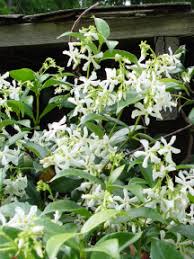
My Confederate Jasmine

Nature's Air Freshener!
It had been a good day and time to relax. Thanks to daylite savings time, I had finished up dinner (supper), gotten my shower, and now walking around the yard drinking my last cup of coffee while admiring my garden. It was still daylite with beautiful cool weather.

Something was different though. I noticed a faint scent in the air- you know the kind where the clothes dryer is going and the smell of Downey Fabric Softner is being exhausted outside? The scent was something like that but more subtle, fresh, and very pleasing to the senses. It was like nature was using an air freshener!

I was determined to find the source when I turned the corner and straight ahead there it was- my Confederate Jasmine! It was full bloom and statley as if to say, Here I am!"


Tucked away underneath and hidden from view was a special treat. Last season, my son (Tim) and I had gathered four gallon containers and filled them with potting soil. We pulled four separate vines lose from the trellis. Each vine was bent where there was a nodule (leaf) and placed in the potting soil. One end of the vine remained attached to the main plant and the other end was left to grow. Tim placed a brick over the spot where the vine was placed in the pot to ensure the vine remained in the soil.

Yesterday was the day to claim our reward. I clipped the vine from the main plant and "unwound" the new vine from the trellis. It was perfect! Both ends of the vine were in full bloom and the container was full of good roots.

The new treasures were quickly planted in the new home spot. It has been my experience that Confederate Jasmine like a moist but not wet soil to do their best. Their planting spot was tilled and a good measure of ground spagnum peat was added to the soil along with some Miracle Grow slow release fertilizer. Now it is time to step back and watch them do their thing!

Side Note
The jasmine that I am speaking of has been with us for a long time (years). We haved moved it right along with us as we have gone and survived Hurricane Katrina. My youngest son was married in an outdoor ceremony under an arbor fashioned for this very same Confederate Jasmine!

Til next time,

Poppy

Monday, April 27, 2009

Another Great Weekend!

A beautiful weekend it was!
Tim and Denise came down for a work/play visit this weekend with plants and tools ready. They combined their visit with some time to go down to the beach and get some sun&sand. Denise says that once you get that beach sand between your toes, you're hooked for life.

We got a lot done in a short period of time however. Mulching, planting some Confederate Roses (a donation from Tim and Denise), and some tilling. It was a bit breezy, but with the high in the mid 80s, the breeze sure felt good.

Are you familiar with the Confederate Rose? Here is a little blurb about it to refresh your memory or to familiarize yourself with it.

Hibiscus mutabilis is an old-fashioned perennial or shrub hibiscus better known as the Confederate rose. It tends to be shrubby or treelike in Zones 9 and 10, though it behaves more like a perennial further north. Flowers are double and are 4 to 6 inches in diameter; they open white or pink, and change to deep red by evening. The 'Rubra' variety has red flowers. Bloom season usually lasts from summer through fall. Propagation by cuttings root easiest in early spring, but cuttings can be taken at almost any time. When it does not freeze, the Confederate rose can reach heights of 12 to 15 feet with a woody trunk; however, a multi-trunk bush 6 to 8 feet tall is more typical. Once a very common plant throughout the South, Confederate rose is an interesting and attractive plant that grows in full sun or partial shade, and prefers rich, well-drained soil.

My next post will be about our Confederate Jasmine.

Til next time,

Poppy

Wayside Gardens

Friday, April 24, 2009

Poppy's Picks- Drought Tolerant Plants

Coneflowers
icon(Click for more info)
Coneflowers thrive in full sun and most garden soils. They grow two to three feet tall, are easy to care for, and make wonderful butterfly magnets. Though drought tolerant, a little TLC (water), will liven it up during prolonged dry spells.

To encourage more flowers, deadheaded your coneflower plants regularly. You can also try shearing the plants back by half or two-thirds their height in early summer to encourage bushier growth and more profuse flowering later in the season.

Coneflower seed-heads are a favorite food of migrating and overwintering birds. If you leave the spent flower-heads in place in late fall, you will find that they are very good at attracting birds to your yard.

Asclepias 'Hello Yellow'
icon(Click for more info)
Bees and butterflies love'm! As they open, the butterflies and bees begin arriving. This Asclepias contains an essential food for Monarch butterflies, and apparently everything else with two wings finds it yummy as well!

Astilbe 'Fanal'
icon(Click for more info)The Astilbe 'Fanal" is an excelent perennial that blooms from early to mid summer producing the darkest red of the Astilbes. The plant is about two feet tall with spikes about one foot long.

The Astilbe in general, likes moist, well dreained soil but can tolerate dry spells with the help of mulch. Just a little TLC goes a long way with this plant.
Here's some more...
Butterfly Carpet
icon

Baptisia 'Purple Smoke'
icon


The above picks will conserve water and labor! They are hardy and wil take hot dry conditions while giving brilliant colors, facinating textures, and unique forms.

Til next time,

Poppy